
Introduction: When Medical Devices Become Digital Gateways
Biomedical Device Security in modern healthcare no longer runs solely on stethoscopes and scalpels runs on connected biomedical devices. From patient monitors and infusion pumps to imaging systems and diagnostic equipment, today’s clinical tools are deeply integrated with hospital networks. While this connectivity improves efficiency and patient outcomes, it also introduces a growing and often underestimated risk: cybersecurity threats to biomedical devices.
For clinics and hospitals in Guam, this risk is amplified. Limited IT resources, aging infrastructure, and increasing reliance on cloud-connected healthcare technology create vulnerabilities that attackers can exploit. A single compromised device doesn’t just threaten data—it can disrupt clinical workflows, delay treatment, and in worst cases, put patient lives at risk.
This is why biomedical device security is no longer optional. It is a foundational element of patient safety, regulatory compliance, and operational resilience. In this in-depth guide, we’ll explore how Guam healthcare providers can supercharge biomedical device security, protect patients, and strengthen trust across Pacific healthcare services.
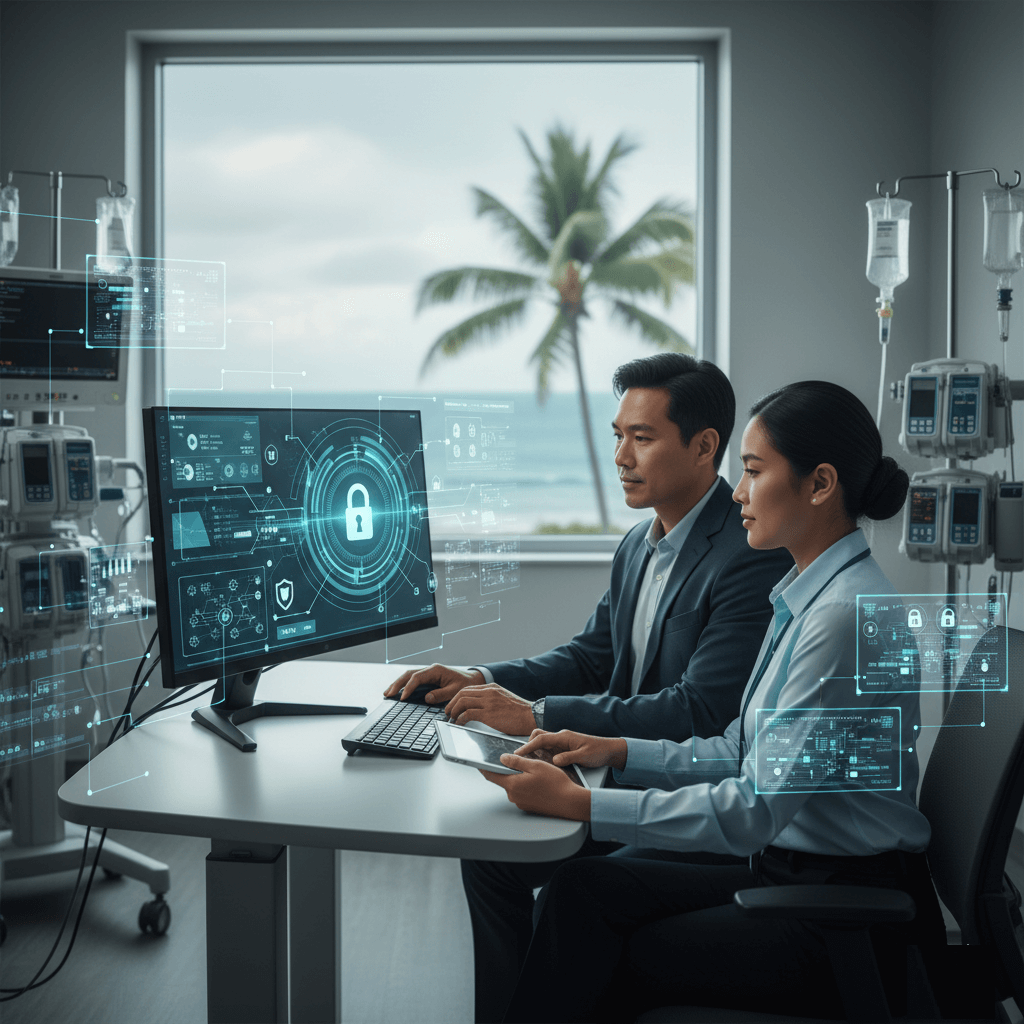
Why Biomedical Device Security Matters More Than Ever
Biomedical Device Security in Healthcare cyberattacks are rising globally, and medical devices are increasingly targeted because they are often overlooked in traditional IT security planning. Unlike standard computers, biomedical devices are designed primarily for clinical function—not cyber defense.
When device security is weak, the consequences can include:
- Unauthorized access to patient data
- Manipulated device settings affecting treatment
- Network-wide malware spread
- Costly downtime and compliance violations
For Guam clinics, where resources and replacement timelines can be limited, even a short disruption can ripple across the entire care system. Protecting biomedical devices is no longer just about technology—it’s about patient safety, continuity of care, and community trust.
The Growing Attack Surface in Healthcare Technology Guam
Healthcare technology in Guam is evolving rapidly. Biomedical Device Security in clinics are adopting electronic health records (EHRs), remote monitoring tools, and cloud-based diagnostics to improve access and efficiency. But with innovation comes exposure.
Every connected biomedical device becomes a potential entry point into your network. Many devices:
- Run on outdated operating systems
- Lack encryption or authentication controls
- Cannot be easily patched without vendor support
Without coordinated biomedical and IT services, these devices can silently weaken your entire security posture. Attackers know this—and they exploit it.
How Biomedical Engineers Play a Critical Role in Device Security
One of the most overlooked aspects of cybersecurity is the role of biomedical engineers in Guam. These professionals sit at the intersection of clinical care, engineering, and IT—and are uniquely positioned to safeguard medical devices.
Biomedical engineers contribute to device security by:
- Validating secure configurations during installation
- Managing firmware updates and patch schedules
- Monitoring device performance and anomalies
- Coordinating with IT teams on network segmentation
When biomedical engineering and IT work in silos, security gaps emerge. When they collaborate, security becomes proactive rather than reactive.
Common Biomedical Device Security Mistakes Clinics Make
Before we talk solutions, it’s important to recognize the most common pitfalls:
1. Treating Medical Devices as “IT Exempt”
Many facilities mistakenly exclude biomedical equipment from cybersecurity policies. This creates blind spots where threats can persist undetected.
2. Delayed Updates and Patch Management
Unpatched devices are among the easiest targets for attackers. Delays often occur due to fear of downtime or lack of vendor coordination.
3. Flat Networks Without Segmentation
When biomedical devices share the same network as administrative systems, a single breach can spread rapidly.
4. Lack of Device Inventory and Visibility
You can’t protect what you don’t know you have. Incomplete asset tracking undermines security planning.
These mistakes are common—but they’re also fixable.
Best Practices to Supercharge Biomedical Device Security
1. Build a Complete Medical Device Inventory
Security starts with visibility. Every healthcare facility should maintain a living inventory of all biomedical devices, including:
- Device type and model
- Network connectivity status
- Software/firmware versions
- Maintenance and update history
This inventory becomes the foundation for both medical equipment maintenance in Guam and cybersecurity risk management.
2. Integrate Biomedical and IT Security Strategies
True protection happens when biomedical and IT services operate as a unified team. This includes:
- Joint risk assessments
- Shared incident response plans
- Coordinated change management
IT teams bring cybersecurity expertise, while biomedical engineers understand device behavior and clinical impact. Together, they create balanced security controls that protect patients without disrupting care.
3. Segment Networks to Contain Threats
Network segmentation limits how far an attacker can move if a device is compromised. By isolating biomedical devices from administrative systems and guest networks, clinics dramatically reduce risk.
For Pacific healthcare services, segmentation is especially valuable because it:
- Improves resilience during incidents
- Reduces downtime
- Protects mission-critical systems
4. Strengthen Preventive Maintenance with Security in Mind
Traditional maintenance focuses on performance and safety—but modern medical equipment maintenance in Guam must also include cybersecurity checks.
This means:
- Verifying secure configurations
- Removing unused accounts or services
- Monitoring device logs where available
Security-aware maintenance ensures devices remain safe throughout their lifecycle, not just at installation.
5. Train Clinical and Technical Staff
Human error remains one of the biggest cybersecurity risks. Training should extend beyond IT teams to include:
- Clinical staff who interact with devices daily
- Biomedical technicians handling maintenance
- Administrators overseeing compliance
When staff understand how device security impacts patient safety, vigilance becomes part of the culture—not just a policy.
Regulatory Compliance and Patient Trust
Biomedical Device Security in Cybersecurity failures don’t just cause operational issues—they can trigger regulatory scrutiny and reputational damage. Data protection laws, accreditation standards, and insurance requirements increasingly expect healthcare organizations to demonstrate robust device security.
For Guam providers, maintaining compliance supports:
- Continued eligibility for partnerships and funding
- Patient confidence in digital healthcare
- Long-term sustainability of healthcare technology investments
Security is no longer just a technical issue—it’s a trust issue.
The Pacific Perspective: Why Device Security Is a Strategic Advantage
In the Pacific region, healthcare providers often operate with limited redundancy. A single incident can have outsized impact. That’s why strong biomedical device security is more than risk reduction—it’s a strategic advantage.
Clinics that invest in secure healthcare technology:
- Experience less downtime
- Respond faster to incidents
- Attract partnerships and skilled professionals
By strengthening biomedical and IT services, Guam has the opportunity to lead by example—showing how island healthcare systems can be both innovative and resilient.
Conclusion: Securing Devices Today to Protect Patients Tomorrow
Biomedical Device Security are no longer isolated tools—they are digital lifelines that support every stage of patient care. As connectivity increases, so does responsibility. Securing these devices is not just about preventing cyberattacks; it’s about preserving the integrity of diagnoses, treatments, and outcomes.
For healthcare providers in Guam, the path forward is clear. By partnering with skilled biomedical engineers in Guam, integrating biomedical and IT services, and embedding security into everyday maintenance practices, clinics can move from vulnerability to resilience.
The future of healthcare technology in Guam will be defined by trust—trust that devices work as intended, that patient data remains protected, and that care continues uninterrupted. Investing in biomedical device security today ensures that tomorrow’s healthcare system is safer, smarter, and stronger for the entire Pacific community.
👉 Engage a trusted biomedical and IT services partner to assess your device security, strengthen maintenance practices, and protect patient safety across your facility.
Because when biomedical devices are secure, patients—and healthcare systems—thrive.